
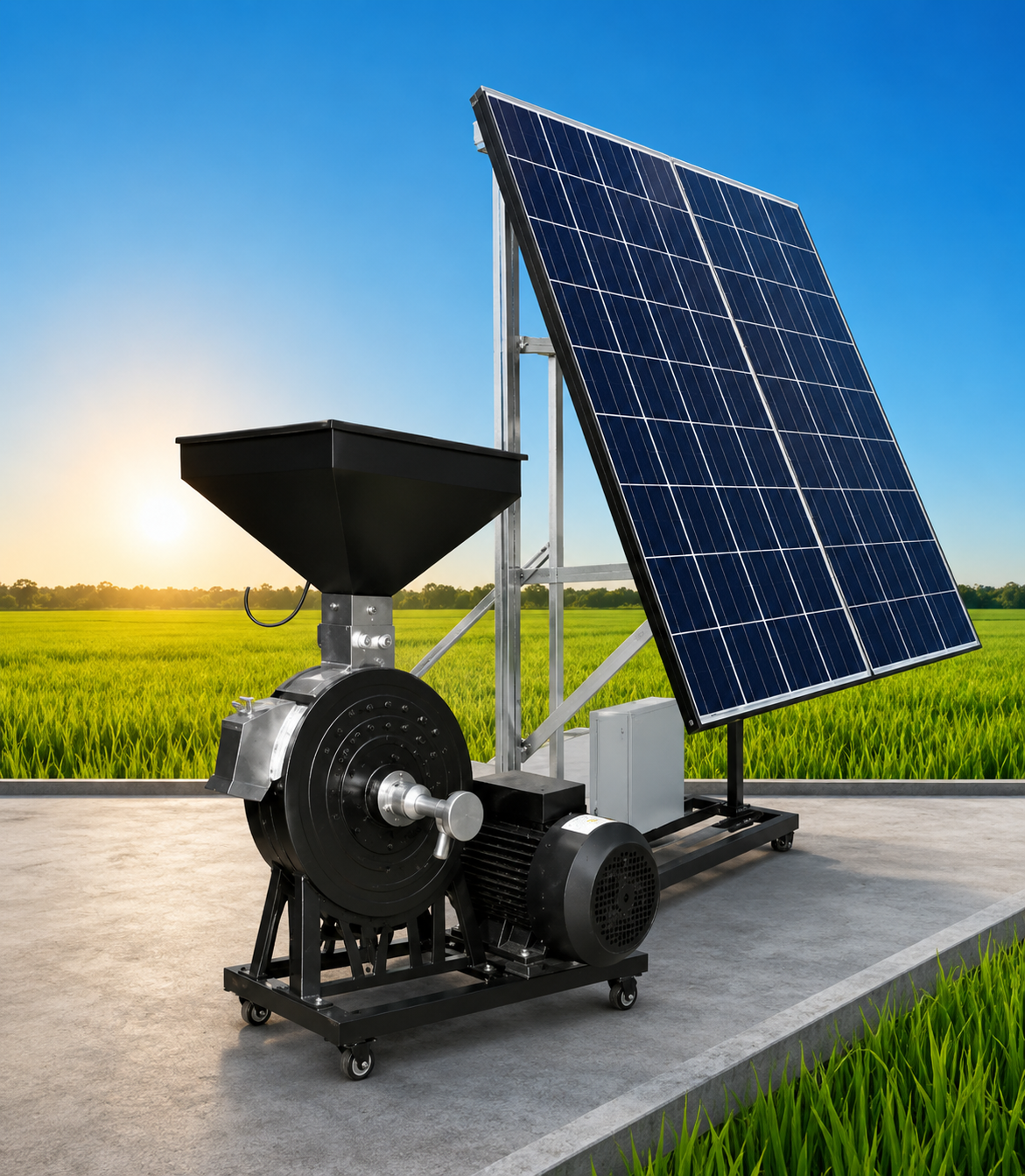
A Solar Atta Chakki is an innovative flour milling solution that utilizes solar energy to grind grains efficiently while reducing dependence on conventional electricity sources.
Designed for homes, farms, villages, and commercial flour mills, solar atta chakkis provide cost-effective and eco-friendly grain processing using clean renewable energy.
A solar atta chakki consists of essential components that work together to generate solar power and efficiently grind grains into fresh flour.
Generate electricity from sunlight to power the system.
Stores solar energy for uninterrupted operation.
Processes wheat and other grains into fine flour.
Controls battery charging and protects the system.
Converts DC power into AC power for smooth operation.
Ensures safe and reliable system performance.
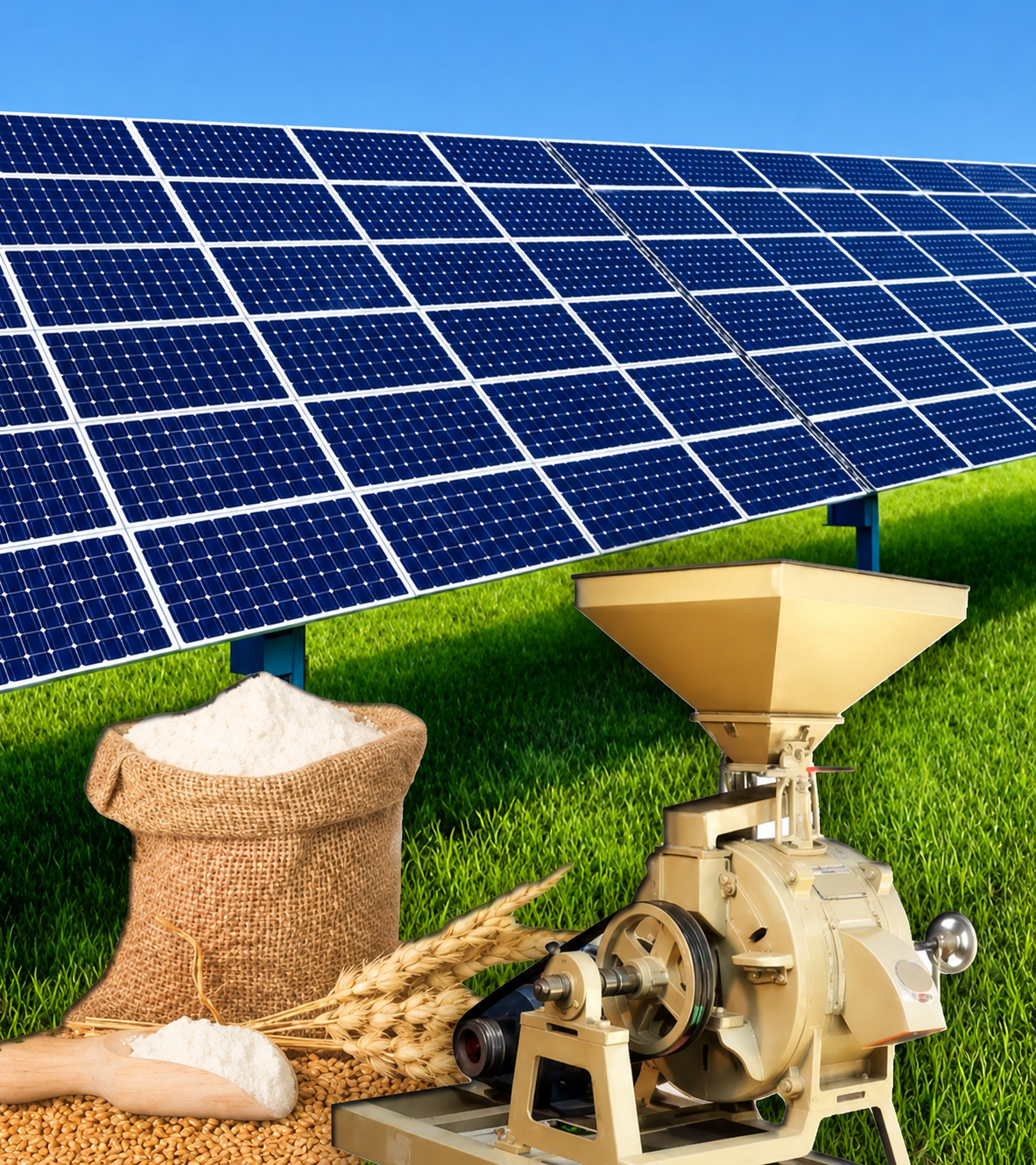
A Solar Atta Chakki is a flour milling machine powered by solar energy. It uses electricity generated from solar panels to grind wheat, maize, millet, and other grains into fresh flour, making it an ideal solution for rural and off-grid areas.
A Solar Atta Chakki is a flour milling machine powered by solar energy for grinding grains into fresh flour.
Solar panels generate electricity that powers the grinding machine directly or through stored battery energy.
It can process wheat, maize, millet, rice, and various other grains efficiently.
Yes, it is especially suitable for rural and off-grid locations where electricity supply may be limited.
It reduces energy costs, supports sustainable operations, provides reliable milling, and utilizes renewable solar energy.