
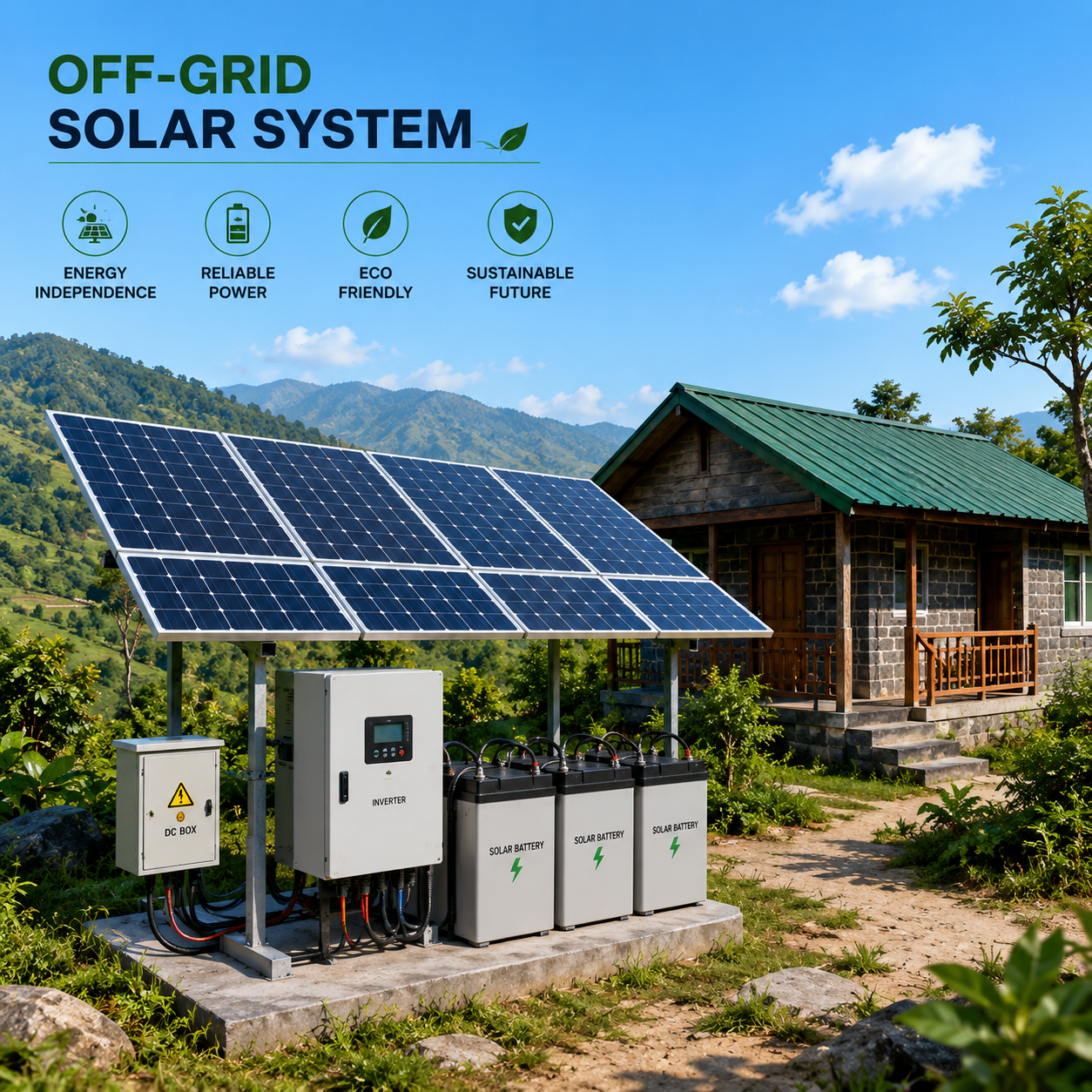
An Off-Grid Solar System operates independently from the utility grid, providing reliable electricity in remote locations and areas with frequent power outages.
Equipped with solar panels, batteries, charge controllers, and inverters, off-grid systems store excess energy for use during nighttime or cloudy weather conditions.
An off-grid solar system consists of several essential components that work together to generate, store, and supply reliable electricity without depending on the utility grid.
Capture sunlight and convert it into electricity for daily energy needs.
Stores excess solar energy for use during nighttime and cloudy days.
Converts DC power from batteries into AC power for appliances.
Regulates battery charging and protects the system from overcharging.
Safely transfers electricity between system components and loads.
Includes breakers and safety devices for reliable operation.
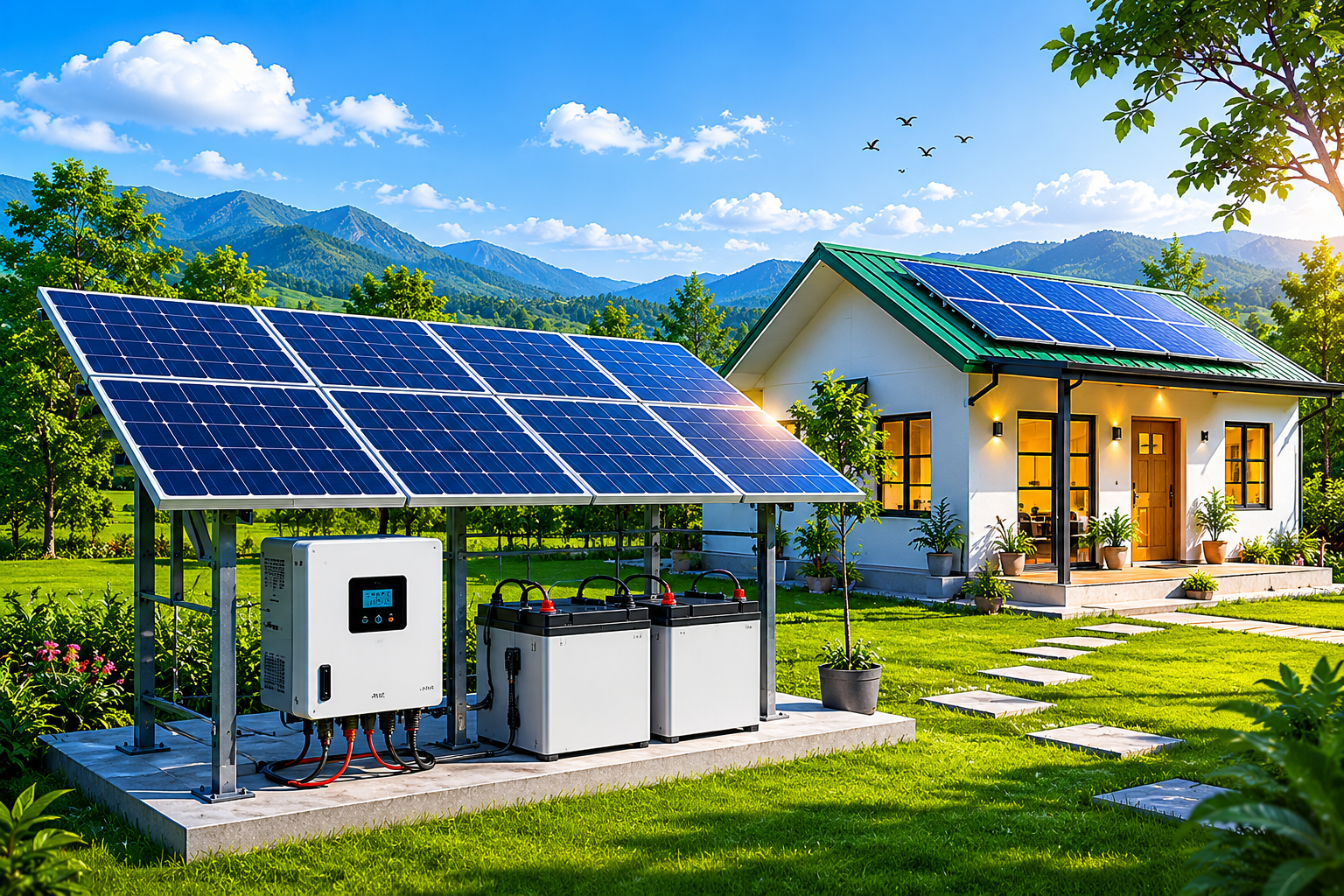
An Off-Grid Solar System is a standalone renewable energy solution that operates independently from the electricity grid. It generates electricity using solar panels and stores excess power in batteries for use during nighttime or cloudy weather conditions.
An off-grid solar system operates independently from the utility grid and uses solar panels, batteries, and inverters to generate and store electricity.
Solar panels generate electricity during the day, which is stored in batteries and used whenever power is required, even at night.
The main components include solar panels, charge controller, battery bank, inverter, mounting structure, and protection devices.
Depending on battery type and usage, solar batteries typically last between 5 and 15 years.
Yes, off-grid systems are ideal for remote homes, farms, villages, and locations where grid electricity is unavailable or unreliable.